
Containment-first work practices
We plan the job around keeping the rest of the building clean: controlled barriers, HEPA filtration when appropriate, and careful material handling during removal.
Serving Tampa, Florida & surrounding areas
Mon–Fri 8am–6pm · Sat 9am–2pm
Mold remediation · Tampa Bay
If you are seeing staining, smelling a musty odor, or dealing with a recent leak, we will locate the source, contain the area, remove affected materials when needed, and document the work so you can move forward with confidence.
Cause-first remediation
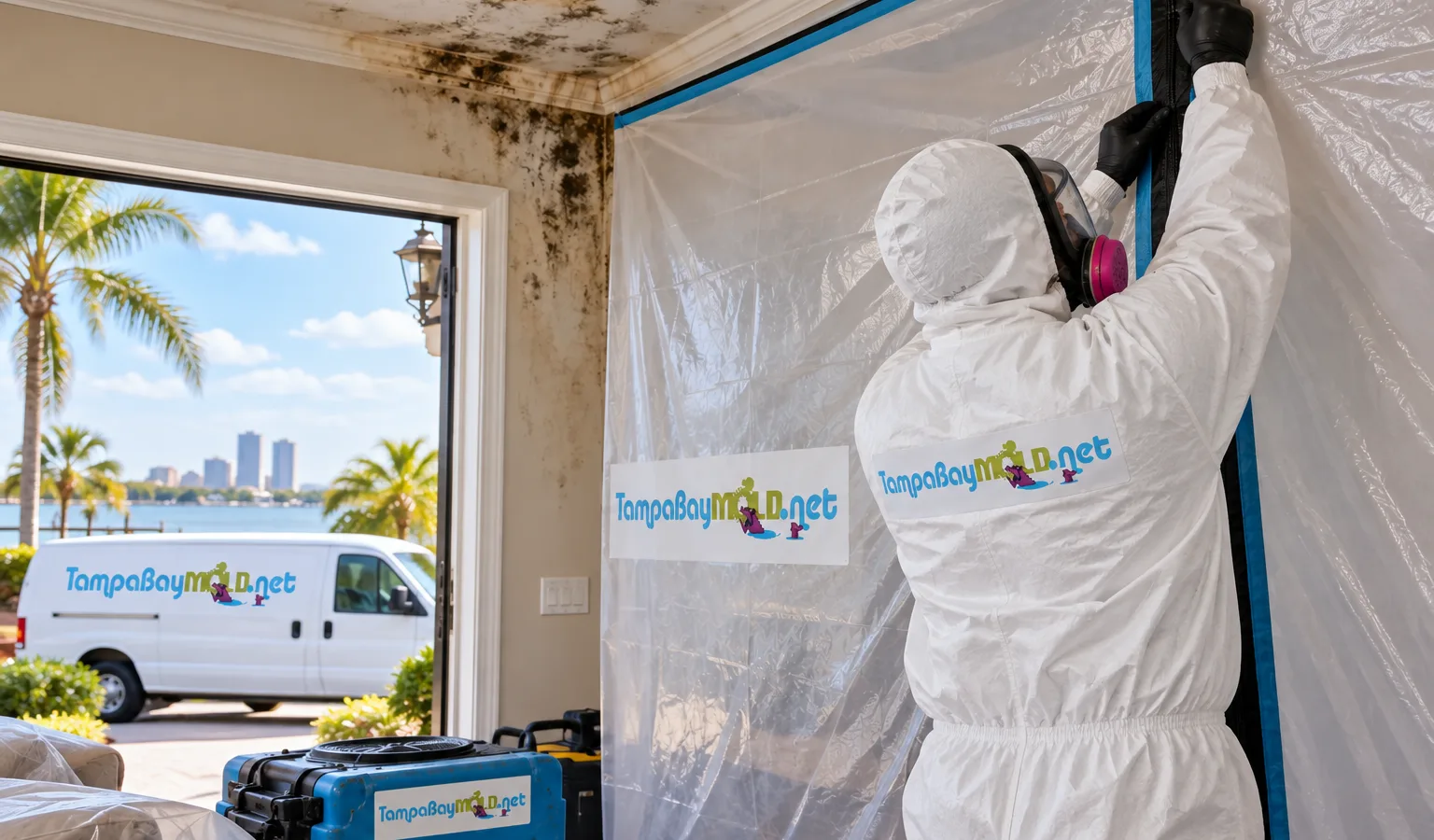
Mold does not become a real problem because it is ugly. It becomes a real problem because moisture keeps feeding it, and contaminated surfaces can keep spreading spores through the air system and wall cavities.
Our approach to mold removal Tampa FL homeowners and property managers rely on is straightforward: find the moisture, stop it, control the work area, remove or clean what is affected, and leave you with clear documentation of what was done.
TampaBayMold.net handles residential and commercial mold remediation across Tampa Bay, including condos, block homes, wood-framed homes, offices, retail spaces, and rental units. We regularly see slow plumbing leaks, HVAC condensate issues, roof or window intrusion after storms, and high indoor humidity affecting closets and exterior walls.
If you need help with a current mold issue, the next step is a site visit so we can confirm the extent of contamination, identify where the water came from, and outline the safest and most cost-effective scope to return the space to a clean, dry condition.
Controlled removal scope
Effective tampa mold removal is a controlled demolition and cleaning job, not a cover-up. The exact scope depends on where the mold is and what it is growing on, but most projects follow the same fundamentals.
We start by defining the affected area and setting up containment so disturbed spores stay in the work zone. That can include plastic barriers, negative air pressure with HEPA-filtered air scrubbers, and controlled entry. We protect pathways in occupied homes and take extra care around shared condo hallways and elevators.
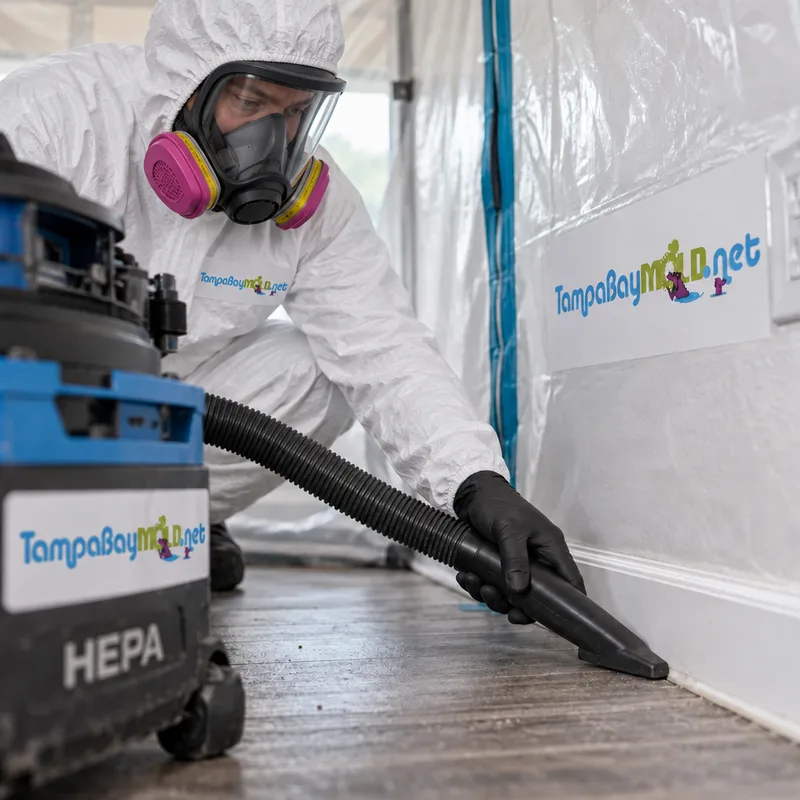
Next comes removal and cleaning. Porous materials that are moldy or water-damaged—drywall, insulation, some baseboards, and carpet padding—often need to be removed and bagged out. Semi-porous and non-porous surfaces may be cleaned using HEPA vacuuming, damp wiping, and targeted antimicrobial application where appropriate for the material.
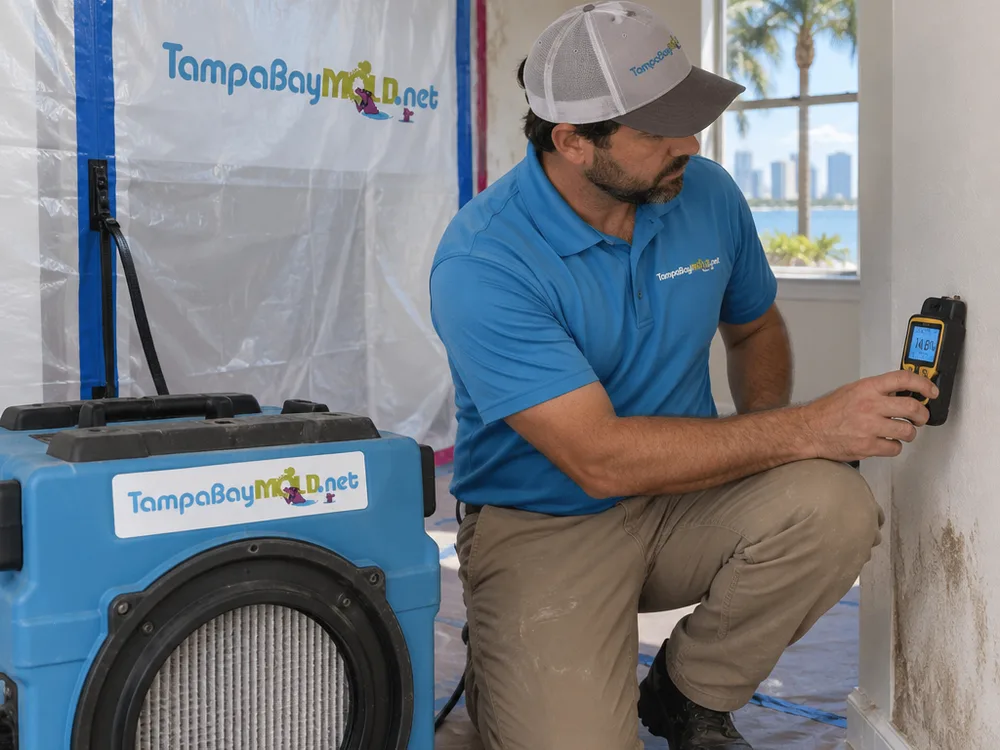
Finally, we focus on drying and verification. If the area is not dry, mold can return fast in Florida. We use moisture readings to confirm building materials are trending dry and document the work for property files, tenant communication, or insurance conversations.
If the situation started with a water event, coordinating the dry-out matters. Moisture must be addressed promptly so the mold scope does not keep growing while materials stay wet.
Documented remediation
We plan the job around keeping the rest of the building clean: controlled barriers, HEPA filtration when appropriate, and careful material handling during removal.
Mold remediation works when the wet condition is corrected. We look for the source so the same wall cavity or ceiling area does not re-grow after repairs.
You should know what is being removed, what is being cleaned, and what is being left in place. We provide practical documentation so you can make decisions on rebuild and next steps.
We protect floors, keep pathways organized, and communicate what areas should be avoided during work, which matters in condos, rentals, and storefronts.
We are comfortable working in block construction, wood framing, and older plaster or drywall assemblies, with an eye on how moisture travels through each.
From assessment to closeout
Step 1 of 5
We inspect visible growth and adjacent areas where moisture often spreads. For musty odors without visible growth, we focus on likely hidden locations such as wall cavities, attic penetrations, and behind vanities.
Step 2 of 5
You get a clear plan for what will be removed versus cleaned, how the work area will be isolated, and what the space will look like at completion.
Step 3 of 5
We remove contaminated porous materials as required, HEPA vacuum and wipe remaining surfaces, and apply appropriate treatments based on material and conditions.
Step 4 of 5
We confirm materials are drying appropriately and flag conditions that can cause recurrence, including condensate issues, poor airflow, or repeated intrusion points.
Step 5 of 5
We document the completed remediation area and outline what is ready for rebuild, including whether a separate evaluation or targeted sampling may be appropriate.
Project pricing
Mold removal in Tampa typically ranges from about $1200 to $6,500+, with small, contained areas on the lower end and multi-room, hidden, or demolition-heavy projects on the higher end. A single-room remediation with basic containment and limited material removal often falls around $1,500 to $3,500, while larger jobs can run higher.
Final pricing depends on the affected area, materials involved, containment requirements, HVAC involvement, access, and whether active moisture needs drying coordination. Exact cost is confirmed after an on-site assessment and written scope.
Fieldwork and containment
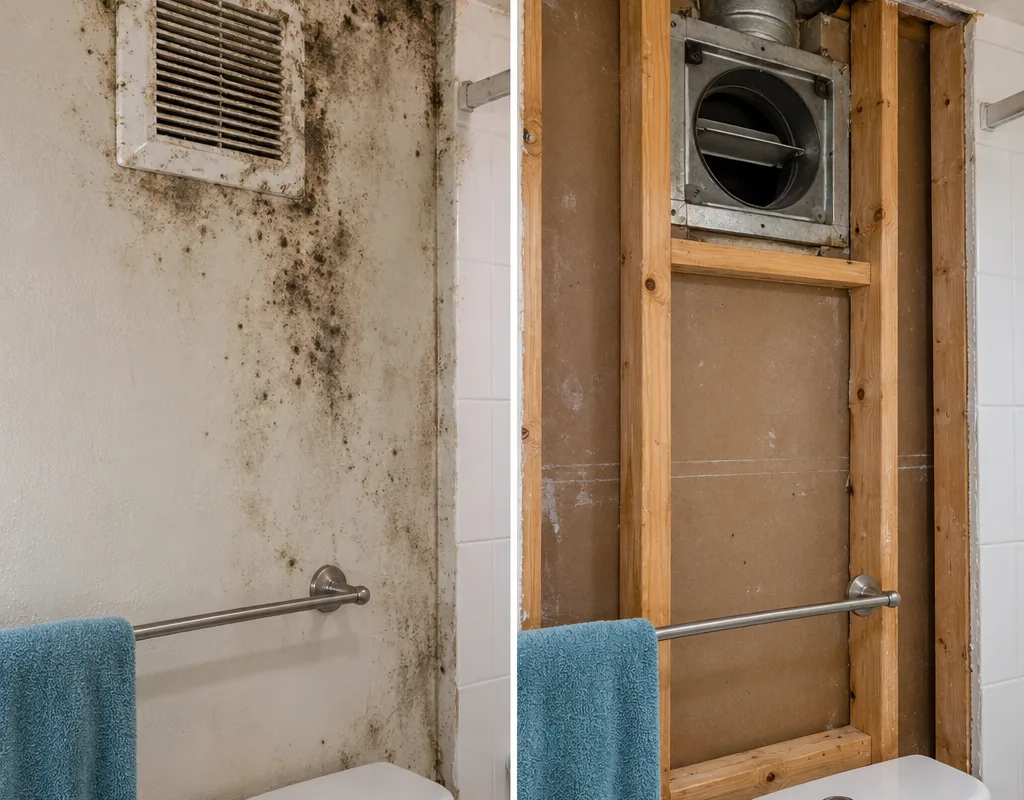
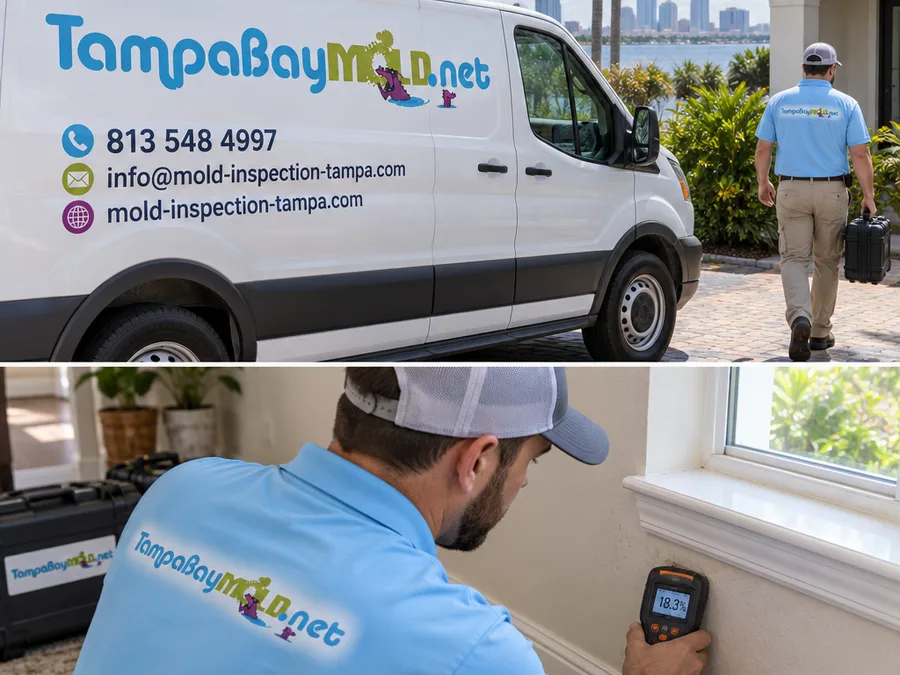
“We had a musty smell that wouldn't go away after a slow leak under the kitchen sink. The team found damp drywall behind the cabinet, set up containment, and removed only what was necessary. The documentation made it easy to coordinate the repairs afterward.”
“Our tenant reported spotting on the bedroom wall after heavy rain. They explained what was likely happening, kept the work area isolated, and finished on the timeline they laid out. The unit smelled normal again and we felt good turning it back over.”
Homeowner questions
If building materials stay damp, mold can begin growing quickly, sometimes within 24 to 48 hours, which is why drying and source control matter as much as removal. In Tampa's humidity, wet drywall, insulation, and carpeting can hold moisture longer than expected. An early assessment can help keep the scope smaller and easier to contain.
Real remediation combines physical removal and cleaning, with treatments used as a support step when appropriate. Moldy or water-damaged porous materials are often removed because they cannot be reliably cleaned through their full thickness. Other surfaces can often be HEPA cleaned, wiped, dried, and verified.
Often, yes, but it depends on the work location and home layout. Occupants can usually stay out of a contained work zone while containment and HEPA filtration control airborne particles. Multiple rooms, main pathways, or sensitive occupants may require other practical arrangements.
Both are common and can combine. Plumbing leaks and roof intrusion create wet materials, while high indoor humidity keeps them from drying and can cause condensation on cooler surfaces. The correct repair depends on the actual moisture mechanism in the property.
HVAC involvement is addressed when the system appears to contribute to moisture or move contaminants, such as growth near returns, condensate problems, or odor distribution. Recommendations are based on verified on-site conditions rather than a one-size-fits-all add-on.
Visible growth, damaged drywall, or a confirmed water event with continuing odor often points toward remediation. When the source is uncertain or the concern is part of real-estate due diligence, inspection and targeted testing can help define the problem before demolition.
Source confirmed. Scope documented.
Tell us what you are seeing and where it is happening, and we will schedule an on-site assessment to confirm the source, the scope, and the safest way to complete mold removal and get the area ready for repairs.